Expand the Possibility Space
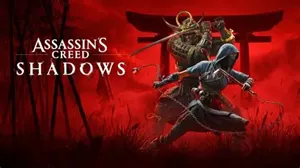
Recently, I’ve been playing my first Assassin’s Creed game, and it’s alright, but I find the character progression really underwhelming. I took some time to think about why, and I think it’s because there are so few options that expand the possibility space of the game. So, unlocking new options isn’t that exciting. This led me to consider the features in my own games.
The possibility space, as I’ll use it here, is all the stuff a player can do in a game.
The possibility space is tricky. It can be explicitly defined (e.g. a rule saying you can’t do something), implicitly (e.g. Paladins having smite as a feature implies that other characters can’t smite, or at least not in the same way), or even thematically (e.g. a low magic, low power system doesn’t need a rule saying you can’t fly, players intuitively understand that’s not in the possibility space for the setting unless you tell them otherwise).
Each character’s possibility spaces are not the same. Character features can expand it, shrink it, or reshape the player’s understanding of it. So when writing features or abilities for a game, there are two possibility spaces to consider:
- The shared possibility space: This is stuff everyone can do. If we strip all the features and abilities off of a character, whatever’s left is the shared possibility space. This usually includes basic actions like attacking, using skills, talking to NPCs, etc.
- The individual’s possibility space: This is all the stuff a particular character can do and can include things outside of the shared space. It’s what makes a character mechanically unique.
Not all abilities alter the possibility space, even if they are unique. A feature that just gives a character +1 damage, for example, doesn’t change the options available to the player. If you give a fighter a +1 sword, nothing will change about how they approach the game; they’ll just sort of… be better. This was my issue with Assassin’s Creed: a lot of the abilities were just “do things you already do a little better”. It’s not nothing, but it doesn’t exactly have me looking forward to earning new abilities.
There are exceptions to this, but generally, small boosts to abilities players already regularly use won’t change how they play the game (or worse, it might make them use other options less often!).
It’s ok to have some features like this, but the most fun and evocative character options seek to expand the possibility space. Uniqueness makes characters interesting, and having different skill sets enables characters to excel at different things. In addition to creating more interesting gameplay, differentiation and abilities that open up new options provide opportunities for player expression.
But if we aren’t careful, we can also write rules in a way that shrinks the shared possibility space. This can happen in a few ways.
Features that implicitly restrict
When we add a feature that grants the ability to do something, we are often implying that other characters can’t do it. My favorite example of this is the actor feat in 5e, which is written as follows:
You can mimic the speech of another person or the sounds made by other creatures. You must have heard the person speaking, or heard the creature make the sound, for at least 1 minute. A successful Wisdom (Insight) check contested by your Charisma (Deception) check allows a listener to determine that the effect is faked.
This is a cool ability but introducing it as a feat shrinks the game’s shared possibility space. If the feat didn’t exist, players would likely think imitating a voice with a deception check is something anyone can do. In games without the actor feat, players often try to imitate voices without having to be told they can. In a game with the feat, players without the feat don’t try to imitate voices because they think they need the feat to do so; the possibility space shrinks.
The paladin’s smite ability is a good contrast to this. Nobody thinks smiting evil is something anyone can do. If you played a generic fantasy game without a smite feature, no one would expect to be able to deal extra damage by burning spell slots to smite their foes. But when we add smite as a feature, it becomes an option for players who take it. Thus, the shared possibility space remains the same and smite becomes an option that expands the possibility space for players who take it.
Without smite, nobody will smite; with it, some players will. Without the actor feat, lots of players will try to imitate voices while disguised; with it, maybe one or two players will, if they take the feat.
It’s really easy to write features like actor because they sound cool, and they don’t read badly, but when you think about it more, you see the issue. The Bard shouldn’t need a feat to do what the Actor feat does, so either the feat is pointless, if the GM lets anyone attempt to imitate voices, or its existence shrinks the possibility space of everyone who doesn’t have it.
Restricting the shared possibility space isn’t inherently a bad thing, but it should be carefully considered. In a high fantasy dungeon crawl game, it probably makes sense for an action like swinging a sword competently to be within the shared possibility space. But in a game about modern-day supernatural detectives, it might not! The important thing is to look at your genre and setting when making your rules and think to yourself, “is this something that everyone should be able to do?”.
Curate your possibility space but do so thoughtfully.
Rules that Limit
While the possibility space technically includes all actions a player can take, I like to think of it as all actions a player doesn’t feel like a chump taking.
A character with 4 strength in D&D technically has pushing a boulder up a hill within their possibility space, but in practice, they don’t. The chance of failure is too high, and the consequence of failure is too high, they will try anything else to avoid pushing that boulder.
This is fine to an extent. At the end of the day the reason you include a stats system is to make some characters better at stuff than others. But one should be careful how much things like stats limit actions you might want characters to take.
This is an issue I see a lot in games with a single stat that manages the entire social system, like charisma in D&D. It's not uncommon for D&D games to have players that rarely participate in important conversations, because they don’t want to mess it up with their low roll. This is bad! In most campaigns, socialization is half the game; you don’t want to have a single stat where being bad at it makes you bad at half the game.
In contrast, something like strength is in a better spot, design wise to me. It’s ok if a character is too bad at pushing boulders to consider trying it. The game isn’t about pushing boulders, and pushing boulders is rarely the only way to interact with a problem. It's not okay if someone is terrible at talking, in a game that is about talking 50% of the time!
There are lots of ways to solve this. My preferred solution is to just not lean on stats for much. In Revolver, there is no social stat, and you don’t roll on your stats in general for mundane situations. Lots of problems can be solved with no roll at all if your solution is clever.
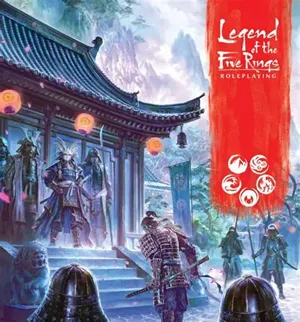
Another interesting approach in a game I read recently is Legend of the Five Rings’ stat system. Rather than have traditional stats, it has approaches instead. Each is represented by an element, and elements excel at different approaches to conversation. Charm and deception is governed by water, earth governs reasoning, and fire governs incitement and intimidation. Since every stat is used in conversation, you can’t make a character that is just bad at talking in general. I wonder if this would result in characters that are a little too one-note, as a character who is best at deceiving might just deceive all the time, but I’m interested in trying it.
The tl;dr here is, once you've decided what your shared possibility space is, make sure characters are actually competent enough to engage with the most important bits of it. If your game is about combat, you don’t want players to accidentally make characters that can’t do anything in combat. Power differences are fine, and different characters should still have strengths and weaknesses, but “Is bad at half the game” is not a good weakness.
Writing Better Features
Ok, that was a lot on how things can limit possibility space, so let’s look at how we can write features that expand it. There are basically two things I like to think about when evaluating a feature for Revolver:
1. If this feature didn’t exist, would players still attempt to do the action it adds?
2. Does this feature create interesting decision points or new options for the player?
Question 1 is essential, if the answer to that is yes, I need to rework the feature a bit. However, you can totally have features that make characters better at things everyone can do. For example, I wrote this feature for the Deadeye class in Revolver:
Perfect Placement
When you throw an object that you can lift with one hand, you can choose where it lands, as long as the landing spot is within 90 ft of you and the object can reach that spot with no more than 2 bounces.
Everyone can throw things, but no one would expect to be able to place an object perfectly without a roll. Deadeyes can. So the shared possibility space on throwing things hasn’t shrunk. Deadeyes are just really good at it.
Question 2 is what determines if an ability expands the possibility space, and it’s more of a bonus. It's ok if every feature doesn’t achieve this, but I like it when most features do.
Let’s say we’re working on a Samurai class. And we add a feature called “attack stance” that gives you +1 damage when you attack. That’s fine; it doesn’t discourage people who don’t have it from attacking. But it doesn’t make the game much more interesting either, because it doesn’t add a decision point or a new option.
Here is a revision that makes the ability more interesting:
Attack stance At the start of your turn, you can choose to enter or exit Attack Stance. While in Attack Stance, you deal 3 extra damage when you attack. However, enemies deal 1 extra damage to you.
This is better. Now it’s a feature with a clear use case (dealing more damage), but there are situations where you might not want to use it since it makes you take more damage in return. When the samurai gets this ability, combat gets an extra wrinkle. The player has to consider when they want to use the stance and when it’s too risky. In contrast, the flat damage bonus version of the ability won’t really change anything about how the Samurai engages with the game; they will just do what they’ve always done but hit slightly harder.
Adding modes, conditions, and costs are all ways to change how a player approaches combat and how they think about their abilities. Just be aware that the more you add costs and conditions, the more complex the feature becomes. In Revolver, I’m ok with this. Characters spend most of the game with just 2-5 features, so I don’t mind them being slightly more complex.
Some of my favorite features add multiple things to consider while still remaining simple to understand. A feature I really like in D&D is repelling blast. Which reads as follows:
Repelling Blast
When you hit a creature with eldritch blast, you can push the creature up to 10 feet away from you in a straight line.
Super simple, but it introduces a lot of things for players to consider. Where do I want to push them? Is there something I can push them into? There’s a hole over there. Can we maneuver so that I can push them into it? What if the fighter drags them near it and I blast them in? So many ways for players to be creative and be rewarded for that creativity.
Another great feature is one I lifted for my assassin class in Revolver. I’ve seen this one on a bunch of blogs, so I’m not sure who the original creator is. If you know, please tell me!
Unlabeled Package
When making a purchase from a store, you can purchase an unlabeled package for any amount of money. Later on, you can open the package and reveal it to be any item available from that store that costs what you paid or less for the unlabeled package. You can only have 1 unlabeled package at a time.
This feature rules. It’s very easy to understand, it’s a flavorful choice for any rogue or expert class, and it opens up so many possibilities! Clever features like this one massively expand a character's options, but in a way that doesn’t require a ton of bookkeeping, fiddly conditions, or added complexity.
Players love figuring stuff out. A simple feature with obvious benefits, but that can be used strategically in even more advantageous ways is like crack to a lot of TTRPG players. Ratlings in Revolver have a tail that can hold small items. The immediate use case is obvious; it can hold a torch. But ratling players are always looking for new ways to use that tail, and they always get so excited when they find one.
Not every feature can be a repelling blast or unlabeled package, but anytime you can replace a flat bonus with a more dynamic rule without adding a ton of complexity, the game becomes more fun, and players get more excited about hitting the next level to gain their next ability.
Limiting the Possibility Space Well
Sometimes limiting an established possibility space can be fun. A room in a dungeon that takes place in an anti-magic field can be a nice change of pace that forces players to consider options they wouldn’t normally use. A ghost that can’t be hurt with physical weapons is fun from time to time. Used occasionally, these sorts of challenges can force players to deviate from their usual strategies.
Just be careful with this. I’m going to use a recent example from Magic The Gathering to make my point here, but you won’t need to understand the game to get it.
This is Screaming Nemesis. I don’t like Screaming Nemesis.
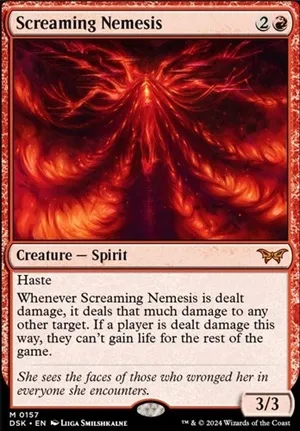
Screaming Nemesis, once triggered, turns off lifegain for the rest of the game. There’s no way to interact with the limitation. The possibility space of the game is just forever shrunk once it triggers. If my deck relies on lifegain, Screaming Nemesis triggers, and I simply think “guess I’m boned!”.
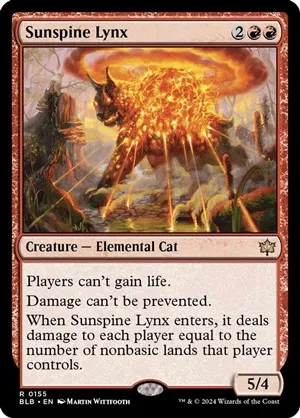
In contrast, I like the version of this effect on Sunspine Lynx. It also turns off lifegain, but only while it’s on the battlefield. This makes it more dynamic. The Lynx stops me from gaining life, but it introduces a situation that can be interacted with. I can try to kill it with one of my creatures or use a removal spell on it. In turn, the other player can try to protect it. They can kill my creatures, so that I can’t block the Lynx, or they can run counterspells to guard against my removal spells. There are lots of opportunities for interaction here!
So limiting the possibility space can be fun, but it should be an interesting change of pace, or provide avenues for interesting solutions vs a permanent reduction in your options. Something like a room or area in a dungeon where magic doesn’t work is more interesting to me than a whole dungeon where magic doesn’t work. The magic user can still work around those restrictions in interesting ways, vs just feeling like they don’t get to do any of their character's cool stuff.
In conclusion:
- Figure out what you want the shared possibility space for your game to include
- Don’t write features that encroach on the shared possibility space
- Do write features that provide new options or improve options within the shared possibility space
- ????
- Profit!