Kayfabe, Brindlewood Bay, and GM Tricks
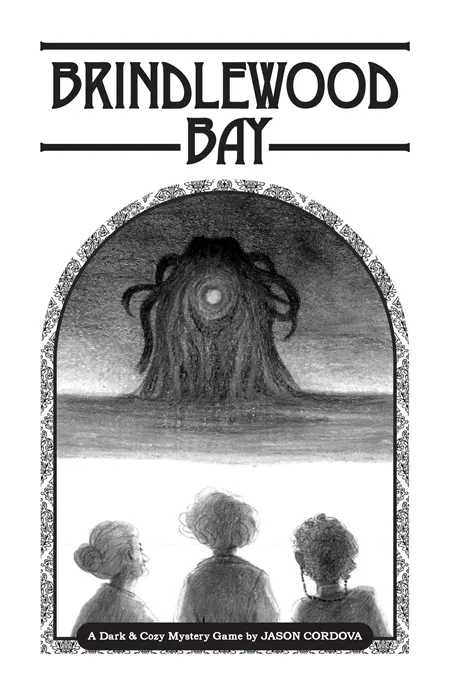
I played my second session of Brindlewood Bay this week (1 mystery, played over 2 sessions), and it wasn't quite to my taste. This wasn't surprising, PBtA games aren't usually quite my style. However, Brindlewood Bay and some of the discussion surrounding it and the idea of "canon" and deception in TTRPGs is interesting to me.
Most of this discussion stems from the core mystery solving mechanic of Brindlewood Bay: the Theorize Move. In Brindlewood Bay each mystery has no preestablished culprit or motive. There are preestablished clues, but where they are placed is not predetermined, and details about them can be created on the fly by player abilities or the GM. For example, it may be established that the reveal of an affair is a clue, but who the affair is between might be established during play.
Once the players have enough clues, they can Theorize, coming up with a plausible theory of who committed the crime and why, using the clues they have found. Whether the consensus theory is correct or not is then determined by a dice roll, modified by how many clues you have.
This is a polarizing mechanic, and how you feel about it will have a big impact on whether or not you like the game.
There are two types of people I've seen balk at this, people that prefer their being a preestablished culprit for a mystery (this is my taste), and people that are ok with the GM inventing a culprit on the fly based on the players having a good idea, but don't want to know the gm is doing that.
The second group is interesting to me. The issue these folks have with the theorize mechanic is less what it's doing and more how it's presented. I think there is a difference here, Kayfabe!
Wrestling with Kayfabe
Kayfabe is a wrestling term that basically means to present professional wrestling as unscripted. Basically, kayfabe is treating the fiction as nonfiction. Even now, when everyone knows wrestling is predetermined, a lot of fans hate it when wrestlers break kayfabe on the air, you don't really want Becky Lynch to come out, look at the camera and say "I'm going to win our match at Wrestlemania, because I'm more popular and you're going to retire soon." It might be true, the audience might even know that it's true, but you don't want to hear that during the show.

It's not a failing on Brindlewood Bay's part not to adhere to Kayfabe. The game wants the players to take authorial stance at times, which forces you out of the fiction and into the writer's seat, at least a little bit. When I use my Phoenix Wright power to invent a detail on a clue, I'm stepping out of the fiction, in a way that I'm not if the GM makes an on the fly change to their mystery without telling me based on my having a cool idea. The outcome is the same, but the experience isn't. Brindlewood Bay isn't accidentally breaking kayfabe, its eschewing it in favor of more collaborative narrative control.
Players that care about maintaining kayfabe won't like this, while players that enjoy the collaborative narrative approach might love it. In games where there are a lot of on the fly fictional adjustments, I actually like the choice to just eschew kayfabe and be honest about what the game is trying to do.
What Players Don't Know Can't Hurt Them
Often, discussions about Brindlewood Bay dovetail into discussions on Canon and GM fudging. An interesting thought experiment:
If the players open a treasure chest, and find a magical sword, does it matter which of the following is true?
a. The sword is there because the GM placed a sword there 3 weeks ago when they wrote the dungeon.
b. The sword is there because the GM decided on the fly to place the sword there for the fighter, who's had a rough go this session.
c. The sword is there because the GM asked the player what they find in the chest when they open it.
In all instances, the sword becomes canon at the same time, when it gets in the hands of the players. But is the experience the same?
For B and C, the difference is Kayfabe.
But for A and B, one could argue there's no difference from the player perspective. The players just know they opened the chest and a cool sword is inside, they don't know why the sword is there.
So, there's a lot of advice in GM circles to do stuff like B a lot. Change outcomes to what's dramatically most interesting, fudge rolls, adjust enemy hp or get rid of it altogether, end fights when dramatically appropriate.
I want to offer a couple reasons why I don't love these sorts of GM Tricks.
1. GM's are Not as Sneaky as They Think
It's easy to "get away with" the occasional fudge or adjustment in the middle of a session, but when a GM is constantly tweaking things on the fly to achieve desired results, it becomes noticeable very quickly. Players may not notice it every time, but most GMs are not good enough actors for this to go unnoticed forever.
Also, GMs love to yap (present company included). We love to talk about GM techniques, encourage other people to GM, and give advice. The reason I usually know when a GM is doing a lot of on the fly fictional adjustment, is because they straight up tell me, at which point we lose the benefit of making these adjustments incognito anyway, and then I wonder why we bothered with the deception.
I love when one of my players wants to take a turn GMing and I can tell them exactly what I do, and why I do it, and know it won't affect how they feel about my games in the future.
I don't like having to keep up deceptions when running a game. I've found my games run smoother when players know exactly how everything works. I appreciate that Brindlewood Bay pulls the curtain back and just lets the players know how the game works, rather than relying on GM deception.
2. You Lose the Sauce
Tweaking results to the outcome the GM decides, especially if you do it a lot, removes the joy of unexpected outcomes!
A character dying in a fight against bandits might feel bad in the moment, but it also creates opportunity. Players have a new rival faction they hate, we get to introduce a new character to the party, it's easy to spin a fight going sideways into months of adventures.
If a boss gets wrecked by the party in just a couple turns, it might seem anticlimactic, but it's memorable. My players still talk about the time they short cutted through my dungeon directly to the final boss. Sure, I could have just moved the boss and made them go through more of the dungeon, but it was fun for them to feel like they got one over on me and the boss.
Unexpected defeats and victories aren't undesirable; they are the reason I roll the dice. If you don't want the characters to die to bandits, it's better to just not play a game where the characters can die to bandits, rather than trying to create an illusion that the characters can die to the bandits, when they really can't.
Just Tell the Players How the Game Works
Ultimately, I'm a big proponent of the GM and players being very aligned on what the game is. There are lots of players who don't mind the GM taking very direct control of the narrative, and there are players who during the session, basically just want the GM to adjudicate dice rolls, and everything in between.
Whatever is fine, but I dislike how much GM advice is "Do this thing in secret to make the game good, your players will never know." Just tell your players what you want to do and pick a game that gives you the levers you want to pull.
Don't be the Wizard of Oz, you don't need a curtain to hide the game behind.