Killing my Darlings, Revising Cambion, Berserker, and Assassin
After much playtesting, I’ve decided to make some tweaks to my GLOG (Revolver) classes. So, let’s look at the feedback each class received, and how I’m changing it.
The Problem with the Cambion
Current version of the Cambion here:Cambion | Sage’s Sanctum
The Cambion is my saddest darling to kill. I’ve always been a big fan of the devil who signs you to a complex contract and forces you into a cat-and-mouse game of finding loopholes, or being exploited by terms and conditions you didn’t read. So, with the cambion, I thought it would be fun to flip that and make you the devil signing others to contracts.
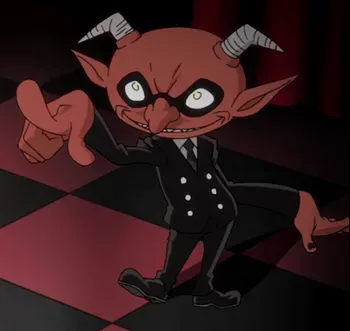
To that end, the current Cambion’s abilities are all about contracts. You can make a binding contract with others, and if either party breaks it, they die. I wanted to encourage players to make unfair contracts, so as a bonus, if someone dies by breaking your contract, you get a Soul Point, a resource you can use to fuel your other abilities.
The other abilities of the class then enable you to make better contracts. You can charm people and learn their greatest fears, which you can use to better manipulate them.
The problem is that Revolver is a dungeon crawler. Every other class in the game is way more focused on abilities that are helpful in a dungeon scenario. A cambion’s contract ability is useful occasionally. I’ve had players use it in situations where they have leverage over another person, like promising to let a prisoner go free only if they sign a contract, but in many dungeons, these features are very hard to use.
Cambions are also very long-term campaign centered. I run a lot of one-shots, and even in longer campaigns, death is cheap in Revolver. Cambion is a slow-burn social class in a fast-paced dungeon crawler. It doesn’t fit.
Negotiating the specific terms of a contract can be fun occasionally, but if the cambion does it all the time, it can really eat into a session. As a gm, I don’t want to be negotiating contract terms with a player every session in my dungeon crawler, and the players don’t want to sit there doing nothing while we iron out the fine print for the 80th time this campaign. But that’s basically the thing the class does, so this one needs a rework.
People like the idea of playing a devil, but the mechanics just don’t match the game’s goals well. I ended up melding this class with another one, so let's look at that before looking at the Cambion revision.
The Problem with the Berserker
Current version of the Berserker can be found here: Berserker | Sage’s Sanctum
The Berserker is a bit of an odd duck in Revolver. It came from a previous iteration of the game that was more traditionally D&D in tone, and frankly, I added it because D&D has barbarians, so I felt like my game should, too.

The problem is that no one ever picks this class. I’ve run a lot of Revolver now, and I have seen this class picked exactly twice. Once as a one-level dip in a one-shot, and once in a different one-shot. No one has picked this class in a Revolver campaign. What’s more is that it’s not even usually considered. Other classes that aren’t the most popular still at least get mentions during character creation, but nobody seems interested in Berserker.
When I asked my players why the Berserker doesn’t grab them, they told me it doesn’t feel strongly connected to the setting. Which makes sense. The setting is a fantasy Wild West in the middle of a war between angels and devils. The gunslinging classes fit, the Veteran class fits, the Angel and Devil classes fit, the Asia inspired classes (Martial Artist, Bushi) seem like an odd fit at first, but they have some intrigue, and some people get it (I wanted to include a class inspired by Chinese culture because Chinese immigrants were such a huge influence in the American west, and I included a samurai because the spaghetti western genre is built on the samurai film genre). Berserker is just kind of… there, it doesn't resonate.
What’s interesting is that in its limited playtesting, the early Berserker features were actually well-liked mechanically. So I wanted to preserve some of that while adding some more charm to the class.
Combining the Berserker and Cambion
Initially, I was just going to rework both of these classes. But I realized that merging them into something new and fresh might solve both problems. Keep the exciting flavor from Cambion, and include some of the fun of a “rage mode”.
Things to keep from each class:
- Cambion: The flavor, the ability to turn into a devil
- Berserker: Some sort of rage mode where you deal more damage
Thus, our new Cambion, below, pending playtesting:
Cambion
Templates
- Devil blood, Devil shift
- Seeing Red, Wrath
- Terrifying, Potent Blood
- Thunderous Wrath
Starting items
Crude armor (+1 def, bulky)
Greataxe (1d8, 2 handed, bulky)
Roll 1d4
- A mask that looks like your Devil parent.
- A cloak big enough to hide your appearance.
- A wooden jar full of crickets.
- A helmet with holes for you horns.
Devil blood
The blood of your Devil parent runs in your veins.
You have horns, fangs, and red or blue skin. Your unarmed attacks deal 1d6 damage.
You can share your blood with a willing creature. When you do, next time they level up, they must take the first Cambion template if they don’t already have it.
Devil shift
You have Devil Points. You start with 0 and have a maximum of 4.
You can spend 4 Devil Points to enter Devil Form, rapidly increasing in size and strength, horns growing, and muscles bulging until you are indistinguishable from a Devil.
Gain a Devil Point anytime you kill a creature with at least 1 hit die.
Entering Devil Form does not take an action and lasts for five minutes. Devil Form has the following effects:
- Gain immunity to fire damage
- Attacks deal +2 damage
- Gain +1 defense
- All enemies that witness the shift reduce their morale by 1
- You cannot gain Devil Points
- Enemies you kill are dragged to hell, leaving only scorch marks behind
Seeing Red
When a creature has 10 or fewer HP, you see a faint red aura around them.
When you attack an enemy with this red aura, you can spend any number of Devil Points and add that amount to your attack’s damage.
Wrath
When you are damaged by an attack, if you don’t already have a wrath subject, you can declare the attacker the subject of your wrath.
Your wrath continues as long as you can see the target and the target is alive. During wrath, you can only attack your wrath subject.
You can spend Devil Points in exchange for extra damage against the subject of your wrath as Seeing Red, regardless of their health.
Terrifying
Whenever a creature that is lower level than you witnesses you kill a creature, their morale is lowered by 1, and they immediately make a Morale check. On a failure, they run or beg for mercy.
Potent Blood
Your Devil blood grows stronger. Whenever you would gain a Devil Point, you gain 2 instead.
Thunderous Wrath
When you kill your wrath subject, you can engulf yourself in flames to immediately enter Devil Form without spending Devil Points. When you do, anyone within close range takes 1d6 damage.
Tweaking the Assassin
Not every class needed a full rework. For Assassin, just a couple of tweaks were in order.
Current version of the assassin can be found here: Assassin | Sage’s Sanctum
This class is mostly well-liked. I just wanted to change a few things based on some patterns I noticed.
At level 1, you get:
Skills of a Killer
Assassins operate with information. When you attack an enemy, for every fact you know about them, deal +1 damage if they haven’t taken an action yet in this combat, up to a maximum of +5 damage. Facts must not be common knowledge.
Cool ability, the thing is, no one ever uses it. I’ve tested at multiple tables with multiple different assassin players, and this just hasn’t been used. I wonder again if this is due to the dungeon crawly nature of the game, where this ability is themed more around stalking a target for a long time.
However, people do use the level 2 ability:
Strike from the Shadows
Whenever you attack an enemy that can’t see you, deal an additional 1d6 damage.
Since people don’t use the first ability much, and honestly, having 2 abilities that just add damage at level one and two is a little boring, I’m replacing Skills of a Killer with a new feature.
Like a Ghost
You move silently and carefully. When your party is spotted by an enemy, there is a 1 in 6 chance you can remain hidden as long as there is something to hide behind. This chance increases by 1 for each Assassin template you have.
The Assassin didn’t have anything that actually improved their stealth. Now they are more likely to surprise enemies and get that Strike from the shadows damage at level 2.
I’m also changing the capstone. At level 4, Assassins get:
Marked for Death
Once per year, you can designate a target for Elimination. When you deal damage to your designated target, they are utterly destroyed, mind, body, and soul. Once you have done this, you can tell people about this ability, and they will understand it is real.
This is a sweet ability I took from this blog post: Do you think I’m cruel? (class: Assassin) | 400 independent bathrooms
Very cool, very flavorful, but weirdly, I think this is actually more of a social skill. Killing a character instantly is obviously very powerful, but the real sauce in this ability is being able to tell people about it and threaten them with it.
But I don’t want this to be a social skill. I’m not against social skills for Revolver, but I think the poisoning skills the class gets provide enough social stuff for the class to do. So I wanted to replace this while keeping the ability to instantly kill someone. So I looked to fighting games for inspiration and came up with this:
Izuna Drop
When you are at close range with an opponent who is unaware of your presence, you can launch them into the air and slam them down headfirst. Creatures with 16HP or less immediately die.Creatures with more than 10 HP take 4d6 damage, are knocked prone, and move to the end of the Initiative order.
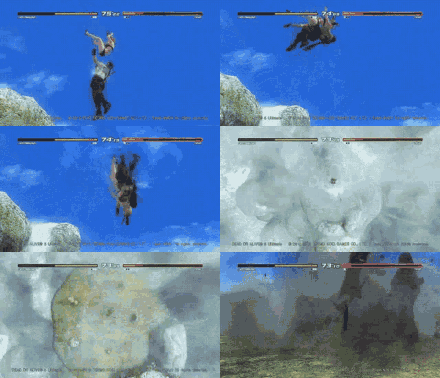
An Assassin's average damage with a d8 weapon and strike from the shadows is 8, so you get to kill anything that is weaker than twice your average damage output. If you don’t get the kill, you still get to nail them for 14 average damage and tack on a meaningful debuff. Plus, Izuna Drops are sick; there’s a reason fighting games keep including it.
So, the full Assassin class (pending playtesting) is:
Assassin
Each time you take an Assassin template, you gain a vial of poison for each Assassin template you have. You decide if you crafted it or got it from a contact.
Starts With:
- 15s (what’s left of payment for a job. You decide who the target was)
- 1 calling card you leave after completing a job (you decide what useless item it is)
Choose one of - A dagger (1d6, one handed)
- A snub-barrelled pistol (1d6, one handed, nearby range)
- A vial of poison
Templates
1: Like a Ghost, Right Tool for the Job
2: Strike from the Shadows
3: Izuna Drop
Like a Ghost
You move silently and carefully. When your party is spotted by an enemy, there is a 1 in 6 chance you can remain hidden as long as there is something to hide behind. This chance increases by 1 for each Assassin template you have.
Right Tool for the Job
When you are speaking to a merchant, you can spend any amount on a sealed parcel.
Later on, you can open the parcel and reveal that it contains any item available from that merchant that costs what you paid the merchant or less. You can only have 1 sealed parcel at a time.
Strike from the Shadows
Whenever you attack an enemy that can’t see you, deal an additional 1d6 damage.
Special Recipe
You can make poisons specifically designed for a target. They only work on one person. These poisons have no immediate effect or taste, but anyone who drinks them takes 20 Brawn damage 48 hours later. To make one dose, you need:
- 3 vials of normal poison
- A vial of the target’s blood or saliva.
Making a dose takes an hour and consumes the ingredients.
Acquired Tolerance
You’ve worked with poison so much that you’ve built an immunity. Drinking a dose of poison does not reduce your Brawn. Animal venom has no effect on you.
Izuna Drop
When you are at close range with an opponent who is unaware of your presence, you can launch them into the air and slam them down headfirst. Creatures with 16HP or less immediately die.
Creatures with more than 10 HP take 4d6 damage, are knocked prone, and move to the end of the Initiative order.
Key Takeaways
I had two major takeaways after doing these revisions.
- Flavor is very important. Players aren’t just looking for a set of mechanics from their class; they will narrow down which class they want to play by which one sounds coolest before they read the class features.
- No class exists in a vacuum. It's important to consider what the game is about when creating a class. The Cambion’s contract mechanics could be really cool in a game centered on social mechanics. You could make a whole game about devil contracts, and it might be really fun, but that game isn’t Revolver. I will be reviewing all of the classes with this lens.
These won’t replace the current versions of the classes until I playtest them a bit, but I think players will have more fun with them!