My Experience Working With an Editor
I eventually want to own a physical copy of my game, Revolver, and it’s been through enough playtesting now that I thought it was time to have an editor take a look.
Fortunately, one of my friends, Juliette Crewe, is an editor and was willing to work on it for me. I’ve never contracted an editor myself, so it was nice to have one I trust! I reviewed her first round of edits this week and sent a revised version of the game back to her for a final round of edits. I thought I would share my experience and some learnings as I get started on updating the Revolver version published on the blog to reflect the edits and playtest changes.
I’m Not Good at Editing My Own Work
And you (probably) aren’t either.
When I sent my draft to Juliette, I had gone over it a couple of times myself and felt pretty good about it. I expected her to find stuff I didn’t, but when I got her notes back, there were hundreds of edit notes! Stuff that spellcheckers and grammar checkers wouldn’t find.
Image by McKenna Olds
The most common issues in my manual were:
Inconsistent Capitalization: Particularly for game mechanics (I capitalized system keywords like Boosted or Impaired), there were lots of times I would capitalize something in one place, and not in another. This is a really easy mistake to make when you work on a system across weeks and months. If you aren’t thinking about capitalization, it’s really easy to autopilot and make a capitalization decision on a word that doesn’t match the decision you made last time. This was the most common edit in my document.
Legacy Terminology: If your game has gone through multiple iterations, some of your terminology is likely to have changed. In my game, HP became Grit, Ability Scores became Stats, and Dexterity became Agility (This made my stat acronym BAM!). When these changes occur, it's easy for some legacy language to hang around. These errors are harder to catch on your own because you know what you meant. When I see “Ability Score” in my document, it doesn’t jump out at me, but my editor was better able to see “Hey, you haven’t used this term before” and direct me to fix it.
Ambiguous Terminology: A term I use in Revolver, both in the Adventuring and Dungeoneering sections, is “Normal Pace”. Despite using the term in both places, it doesn’t mean the same thing. Normal Pace in a dungeon is 10 minutes per room, Normal Pace during exploration is two Hexes per day. While each chapter does define this term, it’s better to just use two different terms, so now in dungeons you move at “Normal Dungeoneering Pace”, and the ambiguity is removed.
Lots of little grammar or punctuation mistakes: This one is self-explanatory. You probably have more of these in your document than you think.
Rules that need more explanation: There are sometimes mechanics that I write in a way that makes sense to me, and maybe even others in the OSR/NSR community, but are confusing to new players or players coming from other styles of RPG. The big one in Revolver was “X in 6” rolls.
In Revolver, I write chance-based events that don’t relate to a character’s stats as “X in 6”, so if something has a 50/50 chance of occurring, that’s a “3 in 6” chance. The idea here is that you can just roll a d6 to determine the outcome.
However, my editor and a couple of my players pointed out that this feels a little weird since I never explain it anywhere. The first time they see a “3 in 6,” their initial thought was “Why not 50/50,” and then “Am I rolling high or low” So I added a header explaining X in 6 rolls in the core mechanics section of the rules explaining to resolve this with a d6 and aim to roll low (to match d20 rolls being roll under). Players might still find the terminology a little weird at first, but I don’t think it will be confusing now, and once players roll one of these, I think the benefits of expressing chance as X in 6 instead of as a percentage will become clear.
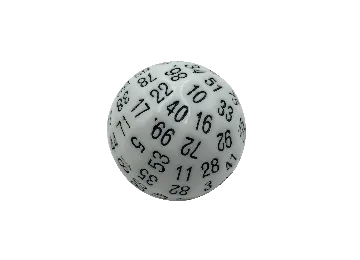
Side note, I really don’t like rolling percentile dice. I think rolling 2d10’s just doesn’t have the grandeur I want rolling a d100 to have. I do own a d100 that I use when I play Mothership, but as a designer, it probably doesn’t make sense to assume players have a d100 lying around, and they take way too long to stop rolling anyway. Everyone’s got d6’s, though!
The Editing Process
I decided it was time to talk to an editor after the third major revision to Revolver, and after significant playtesting. This ensures that:
- The rules are mostly set in stone, and will mostly just see tweaks moving forward (You don't want to write a lot more stuff after your editor is done editing)
- You have had time to read over your own work and figure out the project's vision
- You think the game is fun and you are sure you want to publish it
I got to skip searching for an editor because I already knew Juliette and wanted to work with her. If I did have to search for an editor, I would have reached out to other designers I know that have already published and looked at what editors worked on RPGs with I like that have strong writing, even better if they are in or close to my niche.
Once you have the editor, the hard part is over, just send your draft over to your editor, and wait for it to come back with lots and lots of notes for you to go over. Going over the notes can be a little humbling. Your editor will catch lots of mistakes or sections that are confusing, they will probably point out at least one thing that you won't believe you didn't catch yourself. I think this is normal. Manual writing is hard; you wouldn't hire an editor if you didn't expect them to find anything.
My editor and I agreed on two rounds of editing, so I sent her the revised copy back, and expect to see that returned with more notes on it in the near future. Your experience may vary here depending on your agreement with your editor, but I think two rounds of editing is good. You will likely add some writing during the first round of revisions, so it's good to give your editor a chance to read those changes. This ensures that you addressed their issues, and that the new copy doesn't have any problems.
You Need Outside Opinions
Ultimately, you wrote your rulebook. Unless you went really off the rails with a section, you are usually going to know what you meant when you wrote a rule. This makes you a suboptimal editor. You really need to know if your writing makes sense to someone else. Preferably someone with zero familiarity with your game. If you are able to hire an editor, great, but even just having a friend read through the rules and tell you what they are confused about is great.
This is also why it’s important to have someone else run your game, which is my next step in playtesting. When someone else runs your game, you’ll get to see:
- What rules confuse them
- What rules do they misinterpret
- What rules do they ignore/forget about
- What rules do they need to look up most often
All of this is super helpful for figuring out where you need to add clarity and how your system will perform when you aren’t there to explain what your writing meant. You can skip this if you’re the only one that will ever run your game, but if you want to publish it, or even just distribute it amongst your friends, you need to see how others interpret the rulebook.
When I was in the video game industry, I was involved in setting up and analyzing playtests, and the key was to resist the urge to explain things to the playtester, no matter how stuck they got. We needed to see if the game gave the playtesters the tools to get unstuck. After release, we won’t be in the room with our players, so we needed to figure out the game's pain points and whether it provides players with tools to get around them.
I think the same logic applies to TTRPGs. When I do have someone else GM Revolver, I might step in if the session grinds to a complete halt, simply because I don’t want my friends who are graciously playtesting for me to have a bad time, but I won’t correct rules mistakes, and I’ll let the GM make rulings and check the book instead of answering rules questions myself.
I will take copious notes, though! I think the GM playtest will go much better with the newly edited rules.
How Much Does an Editor Cost/Is it Worth it?
Juliette and I agreed on the median freelance copyediting rate from the Editorial Freelancers Association, which at the time was $80 per hour or $0.04 per word. We both preferred a word-rate-based agreement (this way, I would know the exact cost before we started, and she didn’t feel the need to rush or log hours). So for my document, that came out to around $450.
Being fully honest, it doesn’t make sense to hire an editor unless you are planning to sell your game for a decent amount of money. For me, Revolver is something of a passion/vanity project. I don’t expect to recoup the money I spend to complete it, but I want to write a quality, professional RPG that I am happy to have on my bookshelf or coffee table, and I have the disposable income available to pay for editing and some art. I also want to experience taking a project from zero to publication.
Even just the first pass of editing undoubtedly made my ruleset cleaner, easier to understand, and more fun to read. It is a better ruleset after editing. This is one of the few pay-to-win mechanics in RPG writing. As long as you find a good editor, you are basically just paying them to make your game better, almost guaranteed.
However, the price of editing is not negligible. If you aren’t going to distribute your game, you don’t need an editor; you’re always going to be there to add the clarity to your ruleset that an editor helps you with. If you are going to publish your ruleset, you just have to be realistic about your budget and your game's sales potential. Revolver will not make my money back, but I’m willing to spend a bit because I wanted the experience of working with an editor. Plus, the editor and artists I’m working with are friends of mine, and I’m very happy to work with them!
My next game will be fully public-domain art, and I probably won’t pay for an editor. Not because an editor wouldn’t make it better, but because I’m planning to write in a niche genre and publish the ruleset for free on my blog. The economics of paying for commissioned art and editing just don’t make sense for small projects like this unless you can build up hype via crowdfunding to cover some of the expenses.
It is fun working with an editor and artist, though, and I will happily work with Juliette again when I have another project that makes sense to hire an editor on!
If you need an editor, I cannot recommend Juliette Crewe enough. My game is better because of her work on it.