Mysteries, Cyberpunk, and Rolling Even Less
So I’ve been thinking about Cyberpunk lately, and an idea for a game arose. The idea was to borrow the idea of stacks and sleeves from Altered Carbon (Everyone’s consciousness is stored in a drive called a stack, which can be slotted into any body, which are called sleeves).
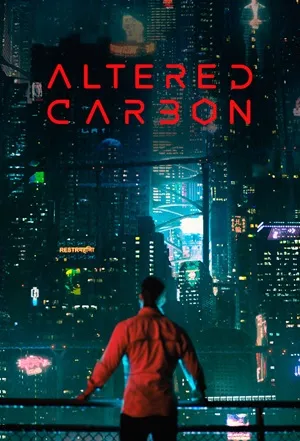
Initially, what drew me to this was the idea of exploring different identities in a world where you might live in different bodies. What does it mean to be a man or a woman when your flesh is a choice? Does growing old and wrinkly instead of slotting into a younger body become a statement rather than a fact of life?
Anyway, mechanically, my idea was to divide each character into two parts. Your stem (this is the drive that holds your personality, knowledge, and mental capabilities), and your frame (your body, physical attributes, and combat acumen).
Players are then part of a crew of runners that do jobs in an episodic structure, stuff like robbing corpos, catching a murderer, etc. Each job ends in something akin to a dungeon crawl, but begins with investigation, espionage, and detective work.
Dungeon crawls I’m comfortable with, but I wanted to do a little bit more research on Mysteries.
How I Run Mysteries Now
It's not like I’ve never had mysteries in my games before. Pretty much all sandboxes are loaded with them, and they’re pretty simple to run. Put clues in hexes, let players piece them together, and if they don’t, that’s fine, the sandbox moves on, and there’s plenty for them to do. They don’t have to find every murder suspect or solve every mystery. In fact, the nature of a sandbox is that players will never solve every puzzle or challenge that they could.
This is a good approach for an open-ended sandbox; there’s no issue of players missing clues, because missing clues doesn’t halt the game. There are tons of things they could be doing at any given time.
Sandboxes usually have mysteries, but solving individual mysteries is not the point.
In an episodic structure, solving a specific mystery is the point. I don’t want episodes to stall because no one noticed the bloodstain on the cathedral floor. I don’t need the players to get all the information they can in every investigation, but I want to make sure they get the key pieces to make decisions. If the party is trying to find stolen chems, they don’t need to know exactly who ordered the theft, or how armed they are, or whether the chems have been sold, but they do need to be able to find the warehouse where the chems are, because that's where the adventure is.
I decided to look at how dedicated detective games handle mysteries, and the first one that jumped to mind was Gumshoe. I happen to own a copy of Bubblegumshoe that I never read (I watched every season of Riverdale), so I decided to have a little reading night.
Why Roll at All?
Each Gumshoe system has its own quirks, such as Bubblegumshoe having social combat rules and Night’s Black Agents having a bunch of stuff for handling 007-esque spy escapades like car chases. All of the Gumshoe systems incorporate a very similar investigation system, though, which is what I’m interested in.

In Gumshoe games, each character has a bunch of investigative skills, and a single point in one represents significant expertise. Anytime you are investigating a scene where a core clue (one essential to solving a mystery) exists, if you use a skill that could uncover the clue, you just get the clue. No roll needed.
You can still put multiple points into an investigative skill, and those are used to extend the information you get or acquire less essential clues. For example, if I had a hacking skill, an investigator might hack into a gang's computer to find where they are keeping a kidnapping victim. That’s the core clue, so the hacker just gets that for saying they want to use the skill in the right place. But if they want to spend a point from their hacking skill, they can gain additional information, if there is any to find. In this case, that might be something like “the hostage is being held in this room of the building” or “You find some schematics that show the buildings' auto turrets have a blind spot”. If they only have one point though, they have to decide if they want the information from this computer, or if they think there will be a better opportunity to spend their point later.
Each game adds a bit of nuance to this system, but the core idea is simple: if you’ve got the skill, and you use it in a place where it’s relevant, you get the important clue.
At first, I balked a bit at this. Where’s the chance of failure?
But thinking more, I realized two things.
- Failure is not always more interesting.
It’s an investigation game. I want the players to have enough clues to start making conjectures. Even in dungeon-crawling games, as long as you don’t outright give the players the solution, I find giving them lots of information about difficult problems makes those problems more interesting to solve.
A pit the party has to cross is interesting; it asks the players to solve a problem, maybe they can use a rope, a spell, or take a different route. A hidden dart trap is less interesting because it’s binary; the players either see it or they don’t, there’s no interesting decision to make either way.
- There is a chance of failure, it’s just not a dice roll.
Even in Gumshoe, players can still fail to find clues. Maybe they don’t bother interrogating a witness, or they don’t think to check the security tapes at the scene of the crime. In these cases, they don’t get the clue. So there is a chance of failure during Gumshoe investigations, but that chance isn’t contingent on a dice roll. And why should it be? If I’m playing as a character who invested points into the pathology skill, shouldn’t my autopsies generally be accurate? I think it’s more fun for the players, and more narratively appropriate for the answer to be yes, the things you are an expert at, you generally do right when there’s either no active opposition or the opposition is weak (relative to an expert).
There are other parts of Gumshoe games too, combat, social combat, etc, depending on the setting. These systems are pretty different than the investigative system. They're mostly still skill based, but you actually roll on general and combat skills. The other systems in Night's Black Agents and Bubblegumshoe seemed fine, but to me, the sauce is in the investigative rules, so that’s all I want to focus on.
Combining Gumshoe with Dungeoncrawling
I’m thinking the first pass of my Cyberpunk system will use the investigative part of Gumshoe as the basis for each character’s stem (their mind and personality). Characters will have investigative skills and talents, and those abilities will always work. Episodes or jobs will take 2-4 sessions. The investigative phase of each episode will play out exactly like Gumshoe. You’ll get a job and some information about it, and you’ll spend time investigating, staking out, and preparing for it.
In the second phase of a job, when you've found your target and you're ready for action, your frame (your body) will be more relevant, and things will run more like a dungeon crawl in Into the Odd or Cy-Borg. Frames die easily, but they can be replaced (provided someone can recover your stem). I like the idea of forking Into the Odd because it's also a very low-roll game. Every time I’ve cut back on rolls in my games, I’ve been happy with the results. I wonder if there’s a point where I would change my mind on that, but the only way to find out is to keep trying stuff.
Something I want to experiment with this structure is making dungeons a little more brutal. In a system where players spend the first part of each episode finding out everything they can about a dungeon, the dungeon should be pretty mean. Tough enemies, lethal traps, the works, doing good investigative work is your only hope to succeed; going in blind should be a death sentence.
I think the distinction between stem and frame will also help these dungeons feel a little bit better. I like character death being on the table in my games, but it can be pretty scary to players, especially coming from less lethal or nonlethal systems. At the same time, I don't want to lower lethality too much. I find players become pretty desensitized to “near deaths” in something like D&D 5e when they realize that it’s actually very rare for someone to die.
Frame death introduces a meaningful consequence that doesn’t represent a total loss of the character. You lose your physical body and whatever cybernetics you had installed onto it, but the character isn’t gone. They even have some new trauma to explore! What did it feel like to die? How are you adjusting to living in a new body?
Of course, death is still on the table. A stem will have a chance of being destroyed anytime a body dies (something like 1 in 6, maybe), and to be placed back in a body, your stem has to be recovered. If it’s not, well, sounds like we’ve got a job for the next episode.
I’m hoping that this can put a fresh twist on dungeon crawling at my tables, and also provide characters that don’t feel invincible, but aren’t so fragile that my players don’t want to emotionally invest in a character before they level up a few times.
I have a couple of playtests I need to run in the next few weeks, but I’m hoping to get a draft of this idea written and tested sometime in March. I’ll report back!
Also, Cyberpunk is neat. Here’s a poem I wrote to help visualize the setting in my mind.
Helianthus
Smog covers the sun
so I watch a holographic sunrise
every morning on my walk to work.
The voxels climb for 5 and half minutes
looming over a city of zombies
before flashing the words
"Don't be vitamin D-ficient
Pop the tab on a can of
Amp Energy Drink!"
The light shifts into the shape
of a bright orange can of pop
as I slot my cred chip into a machine
to purchase a can of the stuff.
Pop. Fizz.
Down the hatch
My heads up display commends my great choice.
I pass three people passed out in the street.
One less than usual.
One's still holding a bottle of liquor.
One's still reeling from last night's hit.
Eyes bugging out like she just met Jesus.
The last drips his crimson syrup on the pavement.
Tangle of frayed wires and cracked bone
where the chrome was carved from his body.
I avert my gaze and walk on,
spotting the blue glow of life from his neck.
The drive storing his consciousness, still intact.
They'll have that drive installed
in a new jacket of flesh by the end of the day.
Good as new, minus the souped-up chrome.
Property damage.
The voxel sun dips.
I step past the neon signs
Into my office
"Free upgrades
With flesh exchange
25 and under only"
What a deal.
There's a young woman on the table.
Trading up her arm for some proper SynCo chrome.
Top of the line.
Check her ID.
26th birthday’s a week away.
“Good timing".
Fair skin.
Good complexion.
Young.
SynCo pays a killing for flesh like that.
I pop my toolbox open.
"Deal only covers the chrome.
anesthesia's 5k creds if you want it."
"Skip it doc, I can take it".
I shrug as I tie the tourniquet to her arm
Pour two shots of whisky.
"drink, then bite down on this rag.
This might hurt a bit"
I rev up the saw, take a hit of Steady.
I carve into her arm.
I conduct her screams with each cut.
I listen to the cacophony of cracking bones and crying.
I've heard this song enough.
It doesn't phase me.
I'm an artist.
Flesh into the freezer.
Chrome on the table
Time to wire her up.
Shithome sweet shithome.