Putting the "Magic" in Magic Weapons
I have found magic items in a lot of TTRPGs I’ve played a little boring. Someone who has played D&D a lot might get excited about a +1 sword or an orb that makes spell DCs 2 higher because these are mechanically strong items. But they aren’t evocative or interesting, and they don’t promote creative gameplay. They have no flair.
I once ran a 5e session for a group of folks who had never played a TTRPG before. I took the intro from Lost Mines of Phandelver, but had it lead into a short dungeon I had made that I knew we could finish in one session. At the end of the dungeon, I included a puzzle. The puzzle was immaterial to the character’s main objective, but solving it promised loot, so the players were into it.
The puzzle took them a bit, but they figured it out, and their reward was a +1 longsword. A pretty good item for a level 1 party, and something I would have been excited to receive on a level 1 character. However, the players seemed disappointed. They were too polite to say anything, but there was an obvious sense of “that’s it?” that turned what should have been an exciting way to cap off the session into a bit of an anticlimax.
So, if a +1 sword is a strong magic item for a level 1 adventurer, why weren’t my players excited about it?
Because a +1 sword is math, not magic.
Magic vs Math
Think about your favorite magic weapon, not just in TTRPGs, include all mediums, better yet, think of your top 10. What do they do? I bet none of them are a +1 sword.
Here’s one of my favorites: Muramasa blades in many folk stories were said to be powerful but cursed. Forged by a masterful, but mad swordsmith. Once unsheathed, a Muramasa sword cannot be re-sheathed until it draws blood. Leave the blade unsatisfied for long, and you may be drawing your own.

Unlike our +1 sword, this thing has character!
Sometimes, this character comes from the flavor. The blood thirst of a Muramasa prompts players to wonder who would make such a blade, and what it was used for before they found it. Is it even a good idea to use a sword like this?
We could stat a Muramasa sword like so:
Muramasa: A katana that deals 1d4 extra damage to humanoids (1d4 is a lot in my game). Once unsheathed, the Muramasa cannot be sheathed until it is used to kill a humanoid. At the end of each day, if the blade is not sheathed, its wielder must make a Mind Save. If they fail, they must attack themselves or an ally with full force.
This is probably not stronger than a +1 sword (which works on everything and improves your to-hit). Still, I strongly suspect that if I had given my new players this instead of a +1 sword, they would have been super into it.
The difference is that there’s nothing about a +1 sword that feels magical. It’s just math. The Muramasa may not be stronger than the +1 sword in general, but it has intrigue to it.
Even adding simple conditions makes weapons more exciting. Instead of a +1 sword, consider a +2 sword that only works on dragons. It's an improvement. Now it's a Dragonslaying sword. You can add more character with its description, such as a hilt carved from dragon bone and a damage type matching the dragon’s breath. A sword dealing lightning damage usually isn’t mechanically crucial, but it’s cool, and when it matters, it's memorable. There’s more for the player to latch onto here.
When people hear the word "magic item," they imagine exciting and weird effects that suggest an interesting origin. They expect the magic sword to do things a normal sword can't. The math behind a magic weapon can make it feel strong, but it doesn’t make a magic item exciting.
Simple Bonuses make for worse gameplay.
A lot of the above was about storytelling or ways to give a magic item more weight in the setting. But magic items with conditions, limitations, and character also make for better gameplay.
Take our +1 sword. Once the fighter gets it, it simply replaces his old sword. Nothing changes about the fighter’s approach to combat, and there are no new decisions to make; the old sword goes in the bin, and the new one becomes their regular weapon.
That’s not very interesting. Let’s compare to our Muramasa example. The fighter is happy to get their hands on it, but it doesn’t become their default choice. It’s not effective against non-humanoids, and even against humanoids, using the Muramasa has meaningful consequences. The fighter must kill someone when they unsheathe it. There will be times when the fighter will choose not to use it, or when using it will cause complications. What if the fight turns out to be a misunderstanding? What if the fighter simply fails to kill someone? There’s drama here. When the fighter draws his Muramasa, the stakes of the fight escalate. Someone must die.
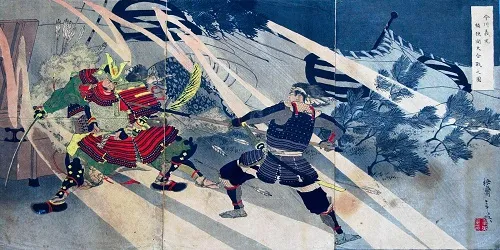
Regardless of outcome, the Muramasa sword becomes an interesting choice for players to make, while still providing a tangible boost in power.
The same concepts apply beyond weapons. Magic items of all sorts are better when they leave room for creative applications compared to items that just solve a problem forever or just make you better at something you already do all the time. A skeleton key that can open all locks is powerful, but dull. If you put that skeleton key in your game, locks are not a part of your game anymore. What about one that can open any lock one time, and makes a loud noise when it is turned? Now the players have choices to make. What’s the best lock to use it on? Will the noise attract guards? Is there a way we can silence the noise? Now we have gameplay and an item that can create stories.
Building a Better Magic Weapon
Here are a bunch of tables you can roll on to jump-start an idea for a magic item. You can roll on all of them if you’d like, or pick and choose. The goal of these tables is to prompt a magic item that has character and promotes player choice and creativity. You aren’t beholden to the tables. Tweak them, make your own, whatever makes sense for your game.
Using the tables
- Roll to decide the weapons' origin.
- Roll 1d6 to decide if the weapon has a complication.
1-2. no complication
2-4. A drawback or cost incurred when the weapon is used.
5-6. A restriction on who can use the weapon or who it can be used against. - Roll on the drawback or restriction table if necessary.
- Roll on the ability table.
- Fill in the details with numbers that make sense in your system. If the weapon has no complication, consider giving it weaker numbers. If the complication is particularly bad, consider stronger numbers.
Weapon Origin
1.Sengo Muramasa
An irritable and violent blacksmith, he evaluated his swords by how many bodies they sliced before they dulled. He had a particular hatred for the ruling class of his era.
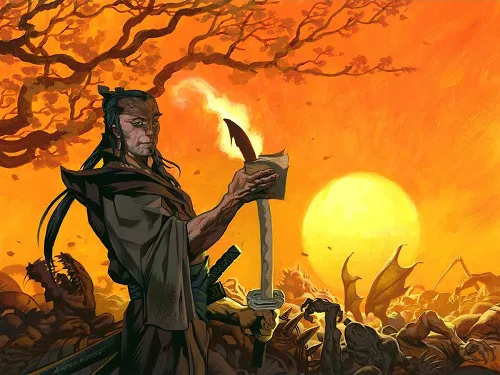
Note. Muramasa was a real guy. You can read about him here. This version is based on fictional legends and stories.
Drawbacks:
1-2. Once drawn, the weapon cannot be sheathed until it is used to kill someone.
3-4 The weapon has no power until its user's blood is spilled on its edge.
5-6 Whenever the weapon is used to kill someone, the wielder's hands appear bloodstained for the next week.
Restrictions:
1-2. It only works against humanoids.
3-4. It cannot be used by a noble or someone employed by one.
5-6. It cannot be used by someone who hasn’t killed in cold blood.
Abilities:
1-2. Extra damage!
3-4. Applies a bleed that damages its target each round.
5-6. Blood that drips off the weapon forms a line pointing to the closest noble.
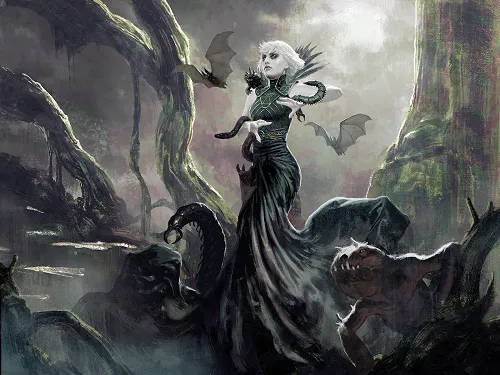
- Morgan, the first witch
Accused of witchcraft, Morgan’s execution date was set. Rather than accept her fate, Morgan dealt with a demon to obtain hellish powers, becoming the first true witch. She left behind the enchanted items she used to destroy anyone who would attempt to detain her.
Drawbacks:
1-2. When drawn, the weapon lets out a demonic sound, alerting anyone nearby.
3-4. To benefit from the weapon's ability, you must spend a spellcasting die (or slot, whatever your system has).
5-6. When drawn, witches within 10 miles can sense the weapon and may seek you out.
Restrictions
1-2. It only works against men.
3-4. It cannot be used by men.
5-6. It doesn’t work against demons.
Abilities
1-2. The weapon glows red, providing light and revealing invisible creatures.
3-4. When drawn, enemies that can see the weapon make a save or become afraid.
5-6. The weapon can be used to summon a specific imp. The imp expects payment, and if they die, the weapon loses its power.
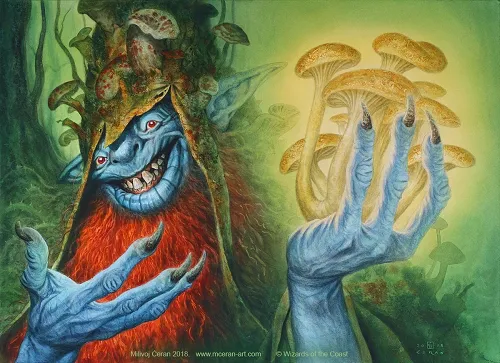
3.Boingus the Bountiful
Description: Boingus is a strange fungal creature deep beneath the surface of the world. Though they could not communicate with the poor strangers that wound up in the Underdark, Boingus tried their best to help them. Boingus would imbue the equipment of strangers with their spores, granting them powers that gave them a fighting chance beneath the earth.
Drawbacks:
1-2. When the weapon is drawn, spores grow on the user for a week. They glow and change colors depending on the user’s mood.
3-4. The weapon cannot be drawn unless the user was damaged in the last round (Boingus intended it for self-defense only).
5-6. When drawn, the wielder can speak and understand Boingus’ language, but they lose the ability to speak and understand any other language. This lasts until 1d4 minutes after the weapon is sheathed.
Restrictions:
1-2. The weapon doesn’t work in daylight. The spores shrink and wither.
3-4. The weapon can’t be used by anyone who hasn’t fed the spores a ration in the last day.
5-6. The weapon cannot deal lethal damage.
Abilities:
1-2. The spores on the weapon are edible. 1 new spore is produced each week. Spores act as rations and a healing potion. If you eat all the spores, the weapon loses its power forever.
3-4. The weapon applies a poison to enemies, lowering their strength.
5-6. The spores leap onto enemies and slow them. Whenever you hit an enemy, they drop to the bottom of the initiative order next turn and cannot take a move action.
Example Weapon
Let’s roll up an example weapon. With each table, you can always just pick an option that sounds interesting, but we’ll roll on all of them here.
First, we roll to pick an item origin.
1-2. Sengo Muramasa 3-4. Morgan, the First Witch 5-6. Boingus, the Bountiful
I got a 5, so our weapon was made by Boingus.
Next, we roll to see if we have a drawback or a complication. 1-2 no complication 3-4. A drawback or cost incurred when the weapon is used 5-6. A restriction on who can use the weapon or who it can be used against
I rolled a 4, so our weapon has a drawback. Let’s roll on Boingus’ drawback table.
This time I got a 6, which is:
“When drawn, the wielder can speak and understand Boingus’ language, but they lose the ability to speak and understand any other language. This lasts until 1d4 minutes after the weapon is sheathed.”
Neat. Lastly, we roll on Boingus’s ability table. Another 6. So:
“The spores leap onto enemies and slow them. Whenever you hit an enemy, they drop to the bottom of the initiative order next turn and cannot take a move action.”
Alright, now let's take all of that, apply numbers relevant to my system (Revolver), and make a usable item.
Spore Coated longsword
A worn longsword coated in enlarged fungal spores
Whenever an enemy is hit by this sword, spores leap onto them. They make an Agility check. On a failure, they move to the end of the initiative order. Additionally, on their next turn, they can move or take an action, but not both.
When this weapon is drawn, the wielder gains the language Boingus and loses all other languages they speak and understand. 1d4 minutes after sheathing or dropping the sword, the wielder regains the languages they forgot and loses the ability to speak Boingus.
That’s a pretty fun item. It has a clear use case, but can introduce a complication if the player needs to communicate mid-combat. And there’s enough flavor here that if I gave my players this, they would wonder where it came from and how it works. Nice!
Using tables like this requires common sense. Had I rolled differently on the Boingus tables, I could have gotten a weapon with the ability to grow healing rations, with the drawback that it can’t deal lethal damage. This isn’t an interesting drawback for that ability. In cases like that, you just reroll or tweak one of the features. The point of the table is to help create ideas for interesting items; the results are flexible, not sacred.
Expanding this system
You can always add more weapon origins, conditions, restrictions, and abilities. Build tables that fit well in your world, stock them with a handful of features, and you’ll be able to quickly make loads of magic items more interesting than a +1 sword.
Enjoying the blog? Subscribe below for updates each week on new posts, and to be the first to know about any major releases.