The Western Kingdom and The Chrysanth Knight Class
Hiya! I haven't posted much lately, partially because work picked up, and partially because I recently decided to learn guitar, so I've been spending a lot of free time practicing!

I can play 5 whole chords, so you should probably hire me for gigs.
I want to do a little prep work for Glaugust. Sometimes my players want to play normal fantasy. They don't always want Cyberpunk, or fantasy but with cowboys. How dare. So, I'm working on some fantasy.
The rules to this hack currently exist in a (very) loosely organized notebook, I'll collect them into a post at some point, but I wanted to start getting some setting and class stuff down. It's close enough to standard GLOG fare mechanically, you'll get it.
The Western Kingdom

A land blessed with eternal Autumn, bountiful harvests, and a countryside covered in golden fields of Chrysanthemums.
The kingdom primarily makes its way farming. With year-round fertile soils, the kingdom is in a perpetual harvest. When one town’s harvest ends, the next begins. Excess is stored for the odd dry month or for trade.
The Chrysanth Knights' policy of protecting anyone where the Chrysanthemum grows has made the kingdom a popular destination for refugees. If you can make it onto Western Kingdom soil, you will be defended from your pursuers.
The Western Kingdom directly borders the Winter Court and acts as a shield, guarding the southern lands against faery warbands from the north.
Farming and Military might are the core focuses of the Western Kingdom. There are no universities, any scholars study elsewhere, and magic more powerful than parlor tricks is rare.
Origin
The western towns and cities were disparate, regularly falling to attacks from the north. To keep the lands safe, Lion the Unifier formed the Chrysanth Knights. Each town chose a representative, who would become their knight captain, charged with training and knighting civilians.
The order grew large and powerful, and the faeries were driven back to the north. Tied together by the Crysanth Knights and a shared adoration for Lion, most of the towns supported his governance. Thus, Lion the Unifier became King Lion I.
For the past 6 centuries, the King of the Western Kingdom has also served as the head of the Crysanth Knights.
Succession Crisis
King Lion XVIII fell to disease 9 months ago, the longest the Kingdom has gone without a ruler. As the king ailed, his duties as head of the Crysanth Knights were handled by High Marshall Ophélie Leroux. It was expected that Ophélie would become ruler, as the king had no heir.
In the eleventh hour after his death, a mistress, Marie Savonnier, stepped forward, claiming her son as the rightful heir to the throne. Marie was a known consort of the King, and the child, even at 16, bears a striking resemblance to the late King.
A schism has formed in the kingdom. The knights reject the heir’s legitimacy, ostensibly out of skepticism, but truthfully because they do not trust the Prince to lead them, regardless of the truth of his birth. Ophélie’s supporters emphasize the threat of the faeries, claiming that it is no time to put the kingdom's fate in the hands of a boy raised by a common woman.
But every ruler in the Kingdom’s history has had the blood of Lion the Unifier coursing through their veins. For the traditionalist, it's unthinkable for Ophélie to take the throne, and for the commoner, there is an appeal to a child of seemingly common stature suddenly ascending to royalty. Marie has also courted isolationists who believe the kingdom should not provide military aid to refugees from the North, or the southern nations.
For months the sides have clashed. An interim government run by a council of King Lion XVIII’s former advisors manages the nation while the crown hangs in the balance. They are struggling. Tax collection and grain disbursements are slow. Some towns reject the interim government's legitimacy. For the first time since its creation, the Crysanth Knights are not answering to the crown. Ophélie has declared herself proper ruler of the kingdom, and the knights have rallied around her, and some towns have already pledged their loyalty to the order.
Eshont
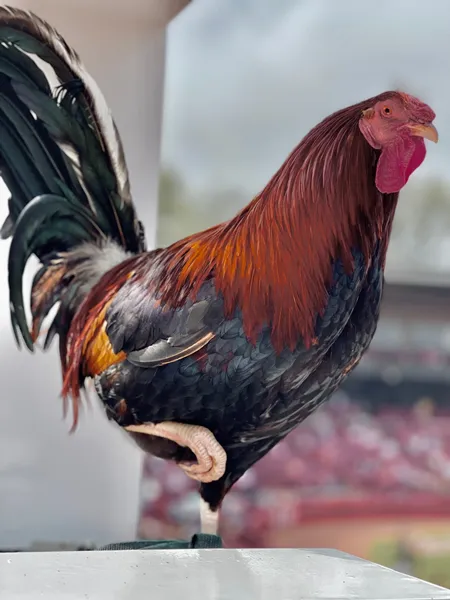
Usually depicted as a Rooster, Eshont is the most commonly worshipped deity in the western Kingdoms. As the story goes, the western lands were barren. Years of famine brought destruction and death.
Eshont visited the Northern Kingdom and beseeched its white queen to share her food with the people of the west. When he was coldly rejected, he stole a sack of magic seeds. As he fled the fae armies that pursued him, he spread the seeds across the lands. When the fae army cornered him, he flew out of their grasp. Higher than the White Queen’s archers could reach and higher still.
Nobody saw Eshont again. But after his flight, it rained for 10 days straight. Every magic seed he spread bloomed. Some into food, some into trees, but most, chrysanthemums, all across the plains. It has been Autumn in the west ever since.
Most towns have a house of worship for Eshont, or at least a small shrine. Every farmer provides an offering of the best fruit or vegetable from each harvest to stave off droughts. It is tradition for Eshont worshippers to bring a chrysanthemum seed to plant as a gift when they visit faraway friends.
Chrysanth Knight Class
Because the Harvest must survive the frost
Because we are unwilling to let the defenseless suffer
For our sacred and bountiful land
For the boundless wisdom of Autumn’s king
To discipline our bodies
To clean our minds
So the innocent are safe, wherever chrysanthemums bloom
-The Chrysanth Knight Manifesto
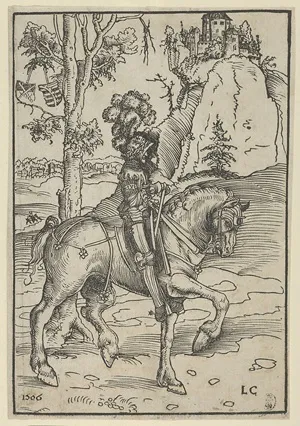
To become a Chrysanth Knight, a character must be knighted by the nobility of The Western Kingdom or a senior Chrysanth Knight. Citizens are eligible for knighting as long as they have performed a verifiable act of daring for the good of the Western Kingdom. They must also swear to uphold the Chrysanth Knight Manifesto.
In addition to leveling up, you must plant 25 Chrysanthemum seeds to gain each additional Chrysanth Knight template after the first.
Skills: Horsemanship, Ceremony or Smithing
Templates
- Chrysanth Raiments, Guard
- Slice the Stems, Parry
- Falling Petals, Greenthumb
- Face Me!, Blossoming Steel
Chrysanth Raiments
When you are knighted, your dubber provides you with a suit of heavy armor, a shield, a sword (melee weapon), and a sack full of Chrysanthemum seeds. Each piece is adorned with a golden flower that marks you as a member of the order.
Citizens of the Western Kingdom, or those with a positive view of the order, will perform small favors for you if you give them a seed. Examples of small favors include any task that doesn’t put the citizen in danger, takes less than a day to complete, and costs less than 2 SP.
Guard
When someone adjacent to you is attacked, you can redirect the attack to yourself (before the attack is rolled).
Slice the Stems
When you Critically hit or reduce an enemy to 0 hp, you can make another attack immediately.
Parry
Once per turn, when you are attacked, you can attempt to block with a weapon you are holding. When you do, the attack is made with disadvantage. If the attack hits, the weapon becomes damaged. If it was already damaged, it breaks.
Falling Petals
When you hit a target that is no more than 10 feet tall, you can choose to knock the target prone or back 10 feet, dealing half damage when you do so.
Greenthumb
Planting so many seeds has made you a surprisingly good gardener. Gain the Farming and Horticulture skills if you don’t already have them. You make double the wage of a normal worker when performing farm labor.
Face Me!
Once per fight, you can demand an opponent capable of feeling shame to face you. For 1d6 turns, if they attack or cast a harmful spell, they must target you. If you hit any other target while this effect is active, it ends.
Blossoming Steel
You can take an extra attack during your turn.